

I attended the Canadian Association of Psychosocial Oncology (CAPO) conference last month — a space dedicated to the human side of cancer care. The sessions were rich, thoughtful, and often inspiring. I’m still sitting with everything I learned, heard, and felt — and if I’m honest, with a bit of heartache too.
I went into the conference expecting to learn more about mental health and supportive care in cancer — but what I came away with was a deeper understanding of just how overlooked, underfunded, and undervalued this vital part of cancer care truly is.
The conference made it clear that I’m not alone in feeling this way. Throughout the sessions, I heard calls to recognize the value of psychosocial oncology as essential, not optional. In one powerful discussion, the focus was on the lack of inclusive support for sexual and gender diverse (SGD) communities. Traditional “pink culture” in cancer care often fails to make space for those who don’t conform to expected norms. It made me realize how invisibility isn’t just something we talk about with rare cancers like IBC — it extends to identities, communities, and experiences that are routinely pushed to the margins. We talked about how online support groups need to be visible, accessible, and affirming to truly serve everyone.
I also sat in on a session about sexual health and the adolescent and young adult (AYA) cancer community. There’s a desperate need for more survivorship planning, resources that meet people where they are, and support that actually reflects the reality of being a young person with cancer.
One of the highlights of the conference for me was the joint symposium on reimagining healthcare to deliver humanistic, psychosocial, and palliative care to underserved and structurally vulnerable populations. Hearing from people doing inspirational work in the trenches — Catherine Dixon, a dedicated nurse navigator from the Northwest Territories, and Dr. Naheed Dosani, a palliative care physician and health justice activist from Toronto — was deeply moving. Both are delivering compassionate care in communities that are rural, remote, or underserved. They showed us how great the needs are for our most vulnerable Canadians and what’s possible when we treat the person, not just the disease.
What came up again and again throughout the conference was this question: how do we get government and policy decision-makers to pay attention to the human side of cancer care? While technology and AI dominate headlines and budgets, psychosocial care remains underfunded and undervalued. Less than 3% of operating budgets are allocated to it. That reality came up more than once, and it says a lot about how care is prioritized.
Where does that leave the human experience of living with cancer?
Dr. Richard Sullivan’s keynote on the Lancet Oncology Commission’s report — The Human Crisis of Cancer — was an insightful wake-up call. He spoke of the growing imbalance between biomedical and psychosocial care and the erosion of the values that once shaped palliative and human-centered care. Dr. Robert Bell, who served as Ontario’s Deputy Minister of Health, emphasized the importance of storytelling and using patient voices to drive real change. There’s so much focus on cost-effectiveness in cancer care, but we have to advocate for investments that prioritize quality of life for patients and families. He challenged us to remember: <strong>”What you measure is what you will act upon.”</strong> Right now, we’re not measuring suffering. We’re not measuring the mental and emotional fallout of cancer. So the system doesn’t respond.
There was much discussion about the need for broad biopsychosocial screening for each patient — the kind that considers not just physical symptoms, but psychological and social factors too — to guide more comprehensive, individualized care plans.
The truth is, psychosocial oncology care is relatively inexpensive. The issue is that it’s not seen as essential. Most resources go to biomedical care — treatments, surgery, and technology.
During one of the panel discussions on integrating psychosocial oncology into standard cancer care, I shared my own story. Despite being a stage 4 patient, my recent referral to a psychologist was marked as semi-urgent, and I was told the wait time was two years. And this was for group therapy. That’s all that’s available to me. Meanwhile, I know other cancer patients in BC have access to a minimum of six free one-on-one sessions. The disparity is staggering.
I asked the panel of cancer care leaders how we’re supposed to address these gaps — how someone newly diagnosed, or anyone facing serious mental health challenges, is supposed to wait two years. Some of us simply don’t have two years to wait.
Dr. Madeline Li responded by saying it comes down to a lack of human resources and that we may need to start thinking creatively — including exploring AI tools like ChatGPT as part of the solution. She then asked me, “Have you tried telling your problems to ChatGPT?”
I was stunned. At first I thought she might be joking — but she wasn’t.
It was positioned as a serious suggestion in the face of long wait times and scarce resources. But what I heard — and what others in the room heard too — was that my pain, my trauma, and my need for support could be outsourced to a chatbot. I simply said, “No, I haven’t. Thank you,” and sat down.
The comment struck me as dismissive and deeply disappointing. Not because I don’t believe in creative solutions — but because at its core, psychosocial care is supposed to be human. And the system seems to be forgetting that.
This is the reality for many of us living with cancer. We’re being told to cope with life-altering diagnoses, to endure loss and fear and uncertainty — and then when we ask for help, we’re met with tech solutions instead of human connection.
Dr. Sheila Garland, a psychologist herself and the incoming president of CAPO, responded to the panel by saying what many of us were thinking: this isn’t just about a lack of resources. It’s about a lack of value placed on psychosocial care. Skilled psychologists are leaving public healthcare because they aren’t supported or respected. And in a system increasingly influenced by privatization and profit, the kind of care we need — care rooted in compassion, presence, and human relationship — is being squeezed out. Psychosocial care doesn’t generate revenue in a privatized model. That’s the reality.
After that symposium, several women — complete strangers — came up to me to say how disappointed they were by the AI suggestion. They thanked me for speaking up. Many of them offered to help me find support and gave me their contact information — a gesture that felt both grounding and incredibly human. In a moment that had left me feeling exposed, their kindness reminded me that while the system may fail us, people still know how to show up for one another.
One quote by Dr. Harold Freeman that Catherine Dixon shared at the conference keeps echoing in my mind: “No person with cancer should have to spend more time fighting their way through the cancer system than fighting their disease.”
That hit home. Not just from a psychosocial standpoint, but as someone living with Inflammatory Breast Cancer, a disease that is often misdiagnosed and misunderstood. We fight for answers. We fight to be seen. We fight to be treated like our lives matter. This conference was more than educational — it was validating, frustrating, and hopeful all at once. There’s so much work ahead. But I believe if we keep pushing, keep sharing our stories, and keep centering humanity in our care models, change will come. I’m deeply grateful to Humber River Health for the opportunity to attend and present at this conference. It didn’t just underline a problem — it made it impossible to ignore: cancer care needs to be rehumanized — and we can’t wait two years to begin.
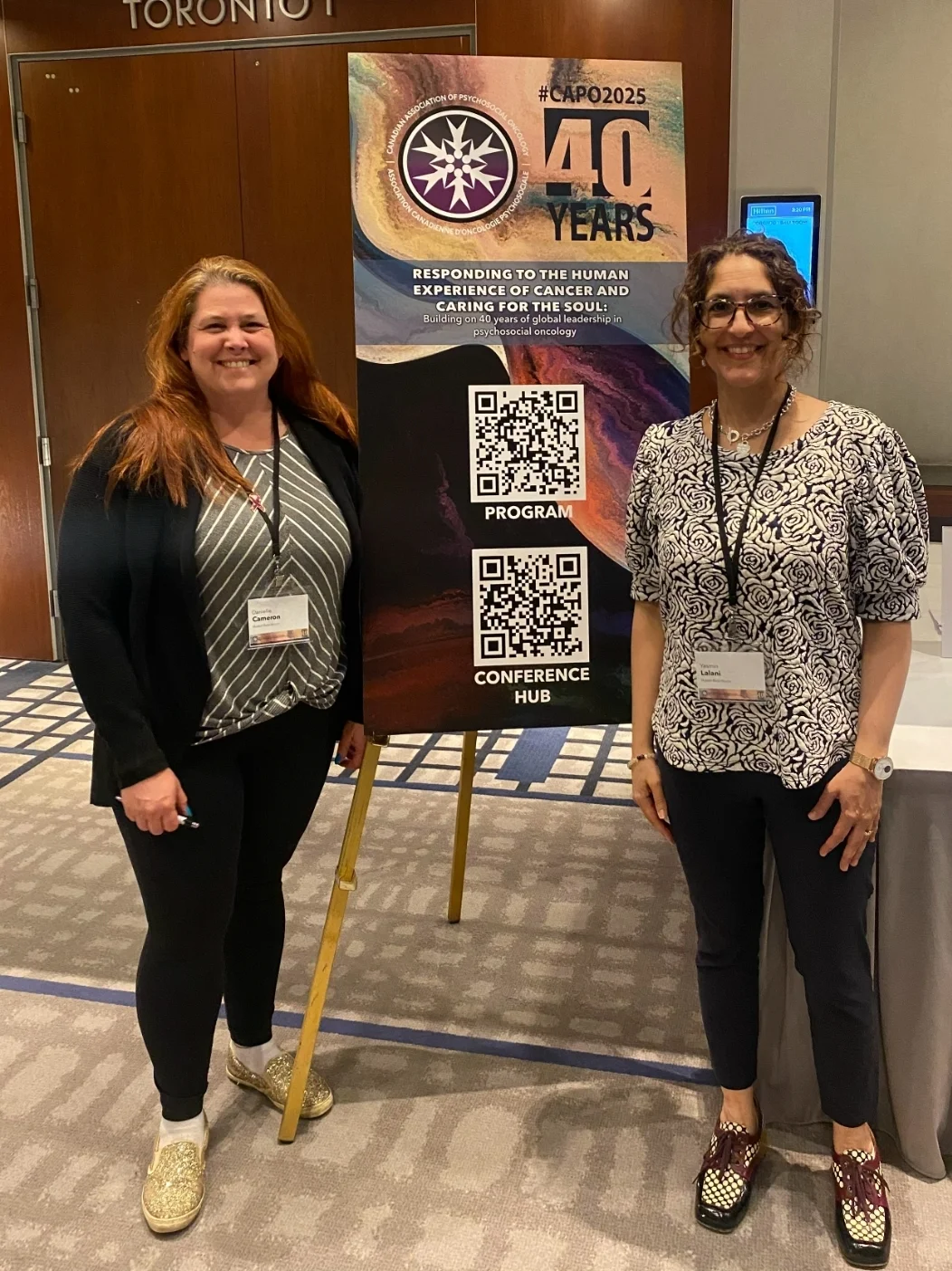
About the Author:
Danielle Cameron is a stage 4 Inflammatory Breast Cancer patient, mom of three, and founder of the IBC Network Foundation Canada. She didn’t ask to be an advocate — but after facing dismissal, misdiagnosis, and systemic gaps in care, she stepped into the role. She now works to make IBC visible in Canada, push for earlier diagnosis and access to proper treatment, and support that actually meets the needs of patients and families.