Have you ever been driving somewhere using GPS when suddenly the road is closed ahead and the GPS refuses to reroute? A cancer diagnosis is a lot like that. One minute you’re cruising, belting out your favorite song, and the next you’re standing on the side of the road staring at a giant ROAD CLOSED sign. Friends and family are shouting directions, your GPS is throwing out unfamiliar options, and every route veers wildly off the pleasant road trip you thought you were on. You have to make fast decisions—who to trust, which way to turn, and how to get moving again in a direction you never planned.
Eventually, with some luck and a lot of effort, you reach your new destination. After catching your breath, you think, “Someone should tell the GPS company that road is closed.” Surely it can’t be that hard. But after clicking through every possible setting, there’s no phone number. No email. No brand name. Just GPS in big letters on the screen. Who do you even contact? How do you fix something when there’s no roadmap?
Patient advocacy is exactly like that. There’s no phone number to call, no master list of instructions. Just a deep desire to make things easier for the next person, without a clear path of how to do it.
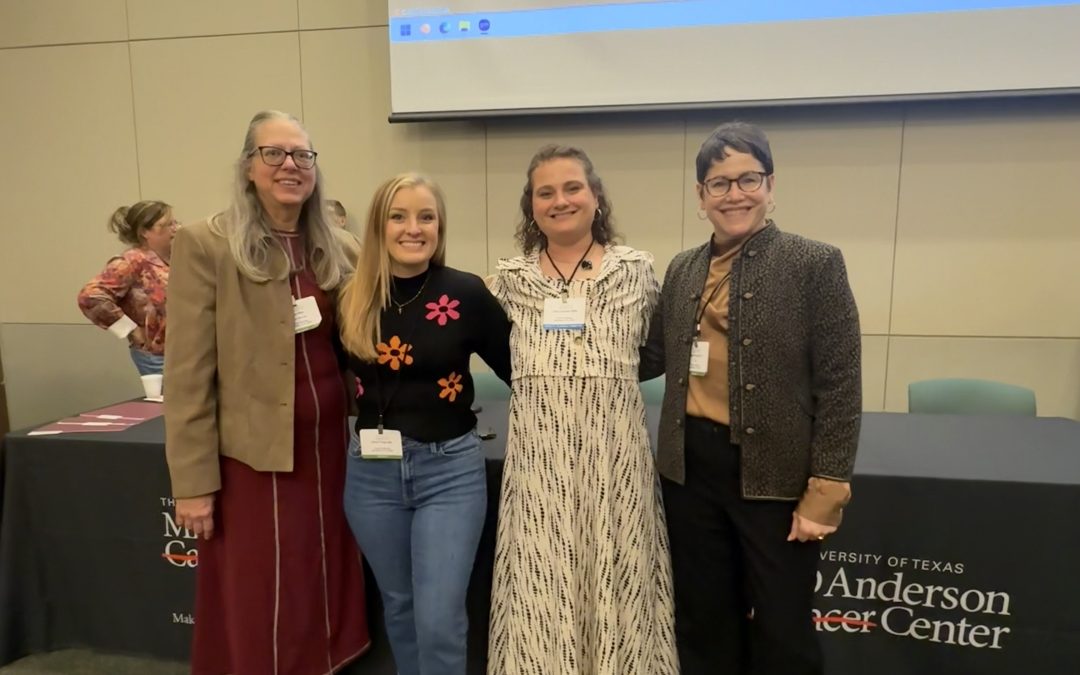
When I was asked to help plan the IBC Connect Conference and facilitate a session on advocacy, I thought back to where I started. In early 2022, I had just finished active treatment. I was left looking at my beat up body of a car wanting to help others avoid the same potholes I hit but unsure how. It was my dream to become a paid patient advocate. I wanted to make just enough money to support my lifestyle and attend conferences educating on inflammatory breast and AYA (adolescent young adult) cancers. So, I convinced my husband (and myself) that the best way to make that dream real was to leave our home in Nebraska and travel America. I attended conferences, camps, workshops, and training. I was learning and connecting while my husband worked from the road. It became the road trip of a lifetime.
I’m incredibly grateful for those travels and the people I met along the way: patients, researchers, scientists, and providers who shaped my path. But I also learned that you don’t have to drive across the country to become an advocate. When asked to moderate the advocacy session I wanted to focus on that. You can do advocacy from anywhere and in lots of ways. Here’s a recap of what I’ve learned both from my own experience and what we shared at the conference.
1. You won’t get rich (but you should get something)
The first thing I learned is that it is extremely hard to get a paid job in the patient advocacy world. At least a typical 9–5 job. And if you do end up being one of the lucky few who lands a paid role, it’s going to require two things: flexibility and fundraising. Lots of both. You’ll be gone from home for a lot for events and conferences. Your hours won’t look anything like a normal schedule, and your job description may change daily. On top of that, because most roles live in the nonprofit space, you’ll be fundraising constantly. If the idea of asking your loved ones for money makes you break out in hives well, brace yourself, because you’ll be doing it often.
Even if a traditional paid role isn’t in the cards, that doesn’t mean you can’t be an advocate. And it definitely doesn’t mean you should be doing everything for free. What “getting something” looks like can vary. Sometimes it’s travel being covered for a conference, or your registration fee or hotel. Sometimes it’s a gift card. Sometimes it’s being listed as an author on a study. Sometimes it’s a letter of reference or certificate of completion. And yes sometimes, (especially at the beginning) it’s putting in the time to grow your network and get your name out there as an educated, talented, advocate.
Remember the more you show up, the more opportunities will land in your lap. The time will come when you’re offered payment in actual dollars. When that does come the National Health Council has a patient compensation tool that helps guide you on what a fair rate is. It’s a great resource to have in your back pocket once you start getting asked for your preferred compensation rates.
2. Get training
Having cancer doesn’t mean you automatically understand the science behind it, or that you’re ready to step into every advocacy space. Research changes constantly. New treatments emerge. Old standards disappear. To be effective, you need to stay current and learn how to communicate with different audiences. You also need to practice how to speak with others effectively.
Great places to start learning these things include the IBC learning Academy, A Fresh Chapter, NBCC Project LEAD, and AACR’s Survivor to Scientist Program. Many other trainings exist both online and in person as well. There’s truly something for everyone, you just need to find it.
3. Know your resources (and yourself)
One thing I wish I’d done differently is not trying to “do it all.” I should’ve slowed down long enough to ask myself what I actually enjoy. For example I don’t like playing a political game, so why did I attend advocacy training focused on lobbying? I took a spot someone else would have loved.
The questions I should have asked myself—and that I encourage you to ask yourself—are:
- What am I good at?
- What do I enjoy?
- What do I not enjoy?
- How much time can I realistically give?
- How will this affect my family?
- How much am I willing to share publicly?
- Do I expect compensation, and in what form?
- Who do I know who can guide me?
Your answers will save you time, energy, and frustration. But if you’d rather travel America and learn the hard way (without a map) by all means go right ahead. I know a few good hotels I can recommend on the way!
4. Find your fit
Along the way, I landed in some advocacy spaces where I just didn’t fit. The people were wonderful, but the work didn’t light me up. And that’s okay.
Your advocacy “fit” may not be glamorous or large-scale. One of the roles that brings me the most fulfillment is co-facilitating SHARE Cancer Support’s AYA Breast Cancer group. It’s only a few hours a month and can have as few as one or as many as ten participants but it feels deeply meaningful. That’s a sharp contrast from my early dream of being paid and speaking on big stages.
The point is, there is no single right way to advocate. Small impact is still impact. Stay open, try things, and trust that your place exists.
5. Network
This is the single biggest reason I’ve gotten the paid opportunities I have. I network constantly. I hand out business cards and bio sketches (basically an advocacy résumé). I stay in touch with researchers, clinicians, and scientists. I let every provider on my care team know I love speaking, sharing my story, and engaging in clinical trials. I’ve even cold-emailed top researchers just to thank them for their presentation at a conference or to ask follow up questions and those messages have led to opportunities years later.
Putting yourself out there is scary. Do it anyway. And once you’re in the room, it’s extra important that you continue to network by bringing in your fellow advocates. If someone is looking for a certain type of advocate, share names. Speak highly of your peers. Lift them up. You always have room in your advocacy hooptie for one more. The road to a world without cancer is long and has no map. It’s better to carpool.