
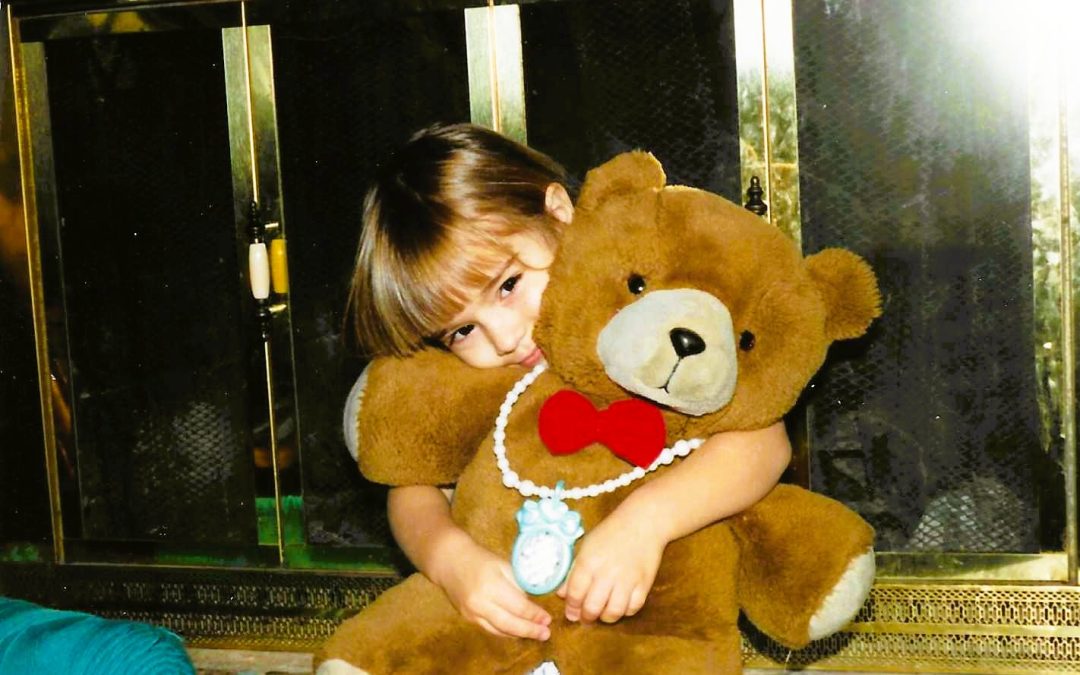
When my daughter was five, we went to our neighborhood resale shop. A large bin overflowed with stuffed animals, and she immediately spotted a well-loved brown teddy bear with a red bow tie. “Mr. Beary!” she exclaimed. It was love at first sight—and the deal was done.
I had only come for winter school clothes and didn’t have money for what I considered a frivolous, threadbare toy. But I couldn’t say no. I had no idea this bear would become such an important part of our lives. Apparently, she had imagined a bear like this for a long time, and suddenly, her dream bear was in her hands.
Mr. Beary traveled with her through childhood, joining many adventures and creating happy family memories along the way. One particularly joyful adventure came years later when my daughter found a girl-version teddy bear. Mr. Beary “married” her, and suddenly there was a little Beary family, which made the joy continue in a whole new way. He traveled into adulthood, too, and when she got married, her husband teased her, joking that he didn’t want her to hide the bear in her dress as she walked down the aisle. That’s how important Mr. Beary had become! Over time, I realized that Mr. Beary taught us a rare lesson: unconditional love. It didn’t matter that his fur was worn, his bow faded and crooked, or that I stitched him up constantly—he was loved anyway.
A few years ago, I discovered a photo essay book from Ireland, released in 2013, called Much Loved, featuring well-worn teddy bears. The photographer had begun by taking a picture of his son’s favorite stuffed animal, a Peter Rabbit. That image led to more photography, gallery exhibits, and eventually the book, which sold over fifty thousand copies.
Much Loved helped me put into words something I had always felt: the unconditional love we pour onto childhood companions. Some of the bears were missing eyes or limbs, yet each one was treasured unconditionally. These bears had provided comfort, absorbed tears, and offered quiet companionship in our most vulnerable moments. The photographs reminded me that unconditional love is about devotion, care, and acceptance—not perfection.
It doesn’t occur to us as adults to love ourselves so fully, to give ourselves the grace of unconditional love. We tend to see ourselves through harsher eyes than others see us, focusing on flaws and imperfections rather than the beauty and strength others notice. In a society that often undervalues self-care, it’s easy to give our time and energy to others while failing to give ourselves the same kindness and attention.
I shared this story with an inflammatory breast cancer survivor struggling to love her body after treatment. I reminded her that others saw her not for her scars or flaws, but for the person they had always loved—and that she deserved to see herself the same way. She later shared that the story of my daughter and Mr. Beary, combined with Much Loved, helped her begin to love herself unconditionally. She even purchased her own copy of the book.
Years later, at the IBC Network’s annual “Ultimate Meetup,” an event held every October exclusively for breast cancer survivors impacted by inflammatory breast cancer, we hosted a breakout session called “Tools of the Trade.” Participants shared coping strategies, medical devices, or personal practices that helped them feel more comfortable in their day-to-day lives. That same woman brought her copy of Much Loved and openly shared how it had helped her find grace and acceptance for her body after brutal treatment. Watching her pass the book around to roughly fifty women in the group, seeing them react, touch the pages, and reflect—it was a profoundly moving moment. It reminded me of my daughter seeing Mr. Beary for the first time: these women were seeing their bodies with new eyes, discovering beauty, and giving themselves unconditional love.
Moments like these remind me that unconditional love is not only a gift we give to others, but also a practice that strengthens resilience. Whether through a childhood toy, a cherished book, or small daily acts of self-kindness, we can remind ourselves that we are worthy of patience, care, and gentle understanding—even when life has left its marks. Learning to extend that same love inward can help us navigate challenges, heal, and move forward with courage and grace.
Unconditional love is often reserved for others—our children, partners, or parents—but we must also extend it to ourselves. Loving yourself doesn’t mean ignoring flaws or much needed personal growth; it means seeing yourself—scars, imperfections, and all—with the same gentle care a child shows a favorite teddy bear.
Love yourself as unconditionally as a child loves a teddy bear.